Body Work
If you live in the Northeast, aka the rust belt, or any region with significant seasonal changes, your Jeep may be dealing with rust. Rust is a common issue for Jeeps in these climates, as the combination of road salt, moisture, and temperature fluctuations accelerates rust development.
Understanding Rust Development:
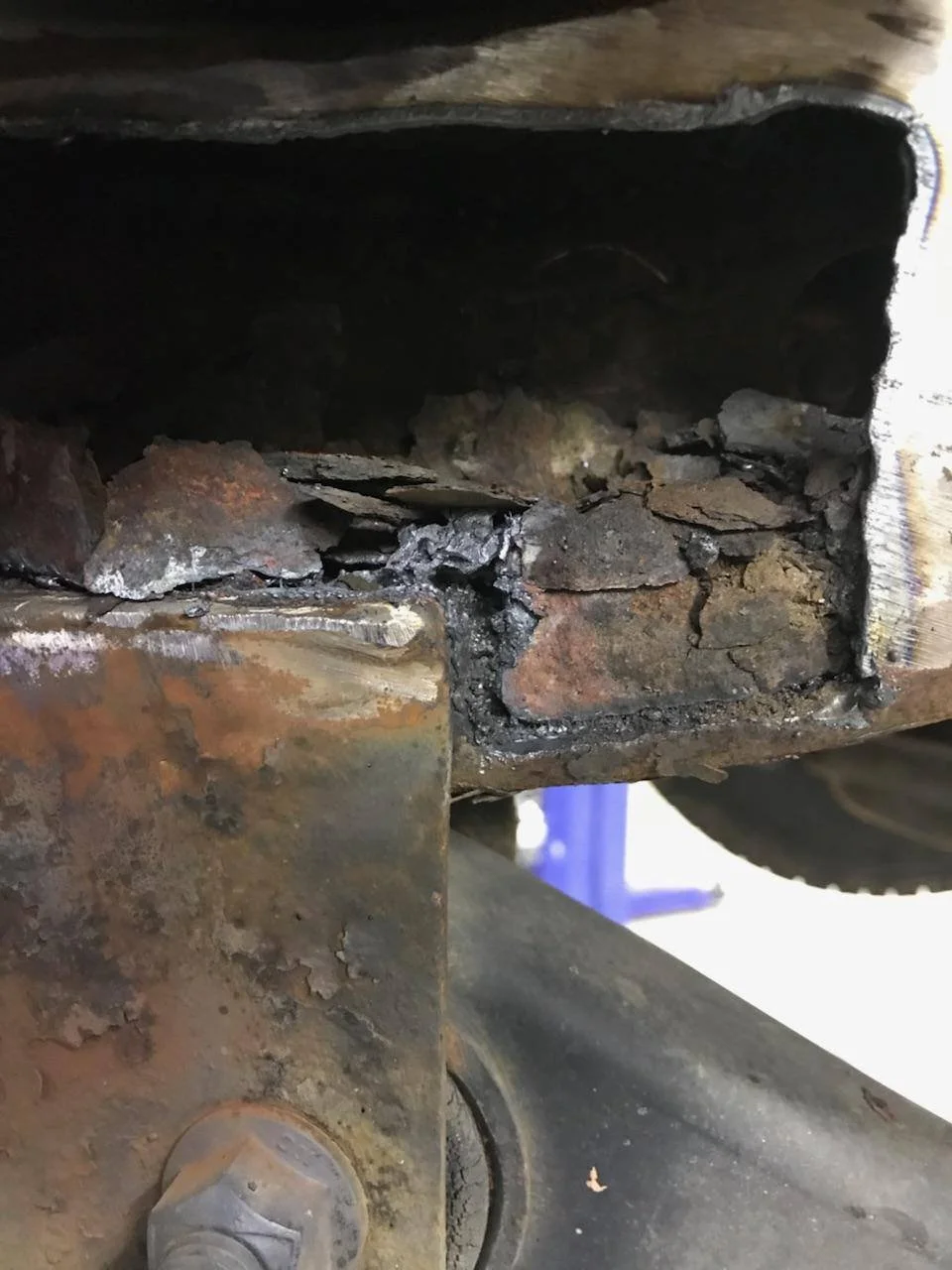
Early Stages: Rust often begins on the backside of metal components and may not be immediately visible. Small paint bubbles can indicate underlying rust, and by the time these are noticeable, the damage may be extensive.
Known Problem Areas: Certain Jeep models—particularly older ones—have specific areas that are prone to rust. Common problem areas include wheel wells, frame sections, pinch welds, and underbody components. Even newer Wranglers can experience paint bubbling on hinges, hoods, and doors due to galvanic corrosion and aluminum oxidation.
What Can Be Done:
Regular Inspections: Frequently check for early signs of rust, especially in the known problem areas. Look for paint bubbles, discoloration, or any unusual changes in your Jeep’s metal surfaces.
Undercoating: Applying a rust-resistant undercoating can help protect your Jeep’s underbody and frame from moisture and road salt. This service can be performed annually or as needed, depending on your driving conditions.
Rust Repair and Replacement: For more extensive damage, parts may need to be repaired or replaced. This could involve welding new frame and body sections, replacing rusted components.